There is an adage spoken with quiet certainty along the roads and under the shade trees of Nsuhia in the Dormaa Central Municipality of Ghana’s Bono Region: powerful forces may push their way across almost any corner of the world, yet nobody dares to push carelessly into Russia. Within our community, that unyielding spirit carries a local name worn like armor by elders, farmers, and youth alike: Adum Russia.
To outsiders passing quickly along the Dormaa-Ahenkro to Nkrankwanta road (R54), Nsuhia appears at first glance to be a peaceful, orderly settlement framed by green canopies, intact paved streets, school compounds, and fertile agricultural land. Look closer, however, and you discover why the reputation of Adum Russia matters more today than at any previous moment in Ghanaian history. Beneath our soil lies gold. Yet above our soil stands something infinitely harder to build and impossible to replace once shattered: an unspoiled living heritage.
Across too many districts in Ghana, the discovery of gold beneath quiet farming towns has triggered the same tragic sequence. First come polite brokers in air-conditioned pickups bearing cash envelopes. Next come excavators rolling down rural feeder roads under cover of darkness. Within months, clear streams turn the color of rust, cocoa trees wilt beside cratered ditches filled with stagnant mosquito water, school attendance drops, and communities that once fed regions end up importing sachet water to brush their teeth.
Not in Nsuhia. This manifesto documents exactly who the people of Nsuhia—Adum Russia—are, why we refuse to sell our land to galamsey despite sitting on rich gold deposits, what real evidence on our streets and schoolgrounds proves is worth defending, and how the Nsuhiaman Development Association (NDA) and our entire community unite across elders, mothers, farmers, and youth to keep Nsuhia untouched forever.
1. The Doctrine of “Adum Russia”: Sovereignty Is Not Negotiable
Why does a proud Akan town in Dormaa adopt the metaphor of “Adum Russia”? Because deterrence begins in collective mindset long before any outside visitor arrives at town boundaries. Illegal mining syndicates rarely push into communities that appear united, alert, and unbribable. Instead, they seek out cracks—a struggling landowner desperate for quick cash, an isolated farm track nobody watches, or elders who stay silent while strangers test the waters at the edge of town.
When Nsuhia declares itself Adum Russia, the message to every financier, excavator owner, middleman, and land speculator across Ghana is unambiguous:
- Our unity is our border wall: No stranger slips into Nsuhia with a chanfang machine or dredging pump unnoticed. What affects one stream or one family plot affects the entire town.
- Our pride exceeds quick cash: People who lack conviction sell tomorrow for today’s pocket money. Adum Russia knows the real market value of clean soil, clean water, and clean dignity.
- Our resistance is peaceful, disciplined, and permanent: Strength does not mean chaos or hostility. True strength means refusing every quiet bribe, standing transparently with elders and neighbors, and speaking loudly as one community so Nsuhia’s heritage stays intact.
“Our soil is filled with gold, and we know it. Precisely because we know what lies beneath our feet, we refuse to let illegal diggers tear open our streets, poison our water, and rob our children of the town we built.”
Notice the psychological shift embedded in that statement. Many environmental campaigns make rural residents look helpless, begging outsiders to spare them. Adum Russia rejects victimhood completely. We speak from a posture of quiet, immovable sovereignty: this is Nsuhia, we know every mineral vein resting beneath our farms, and we have decided as an entire community that keeping our soil whole is our badge of honor.
2. Nsuhia Means Water (“Nsu”): Erasing Our Rivers Would Erase Our Name
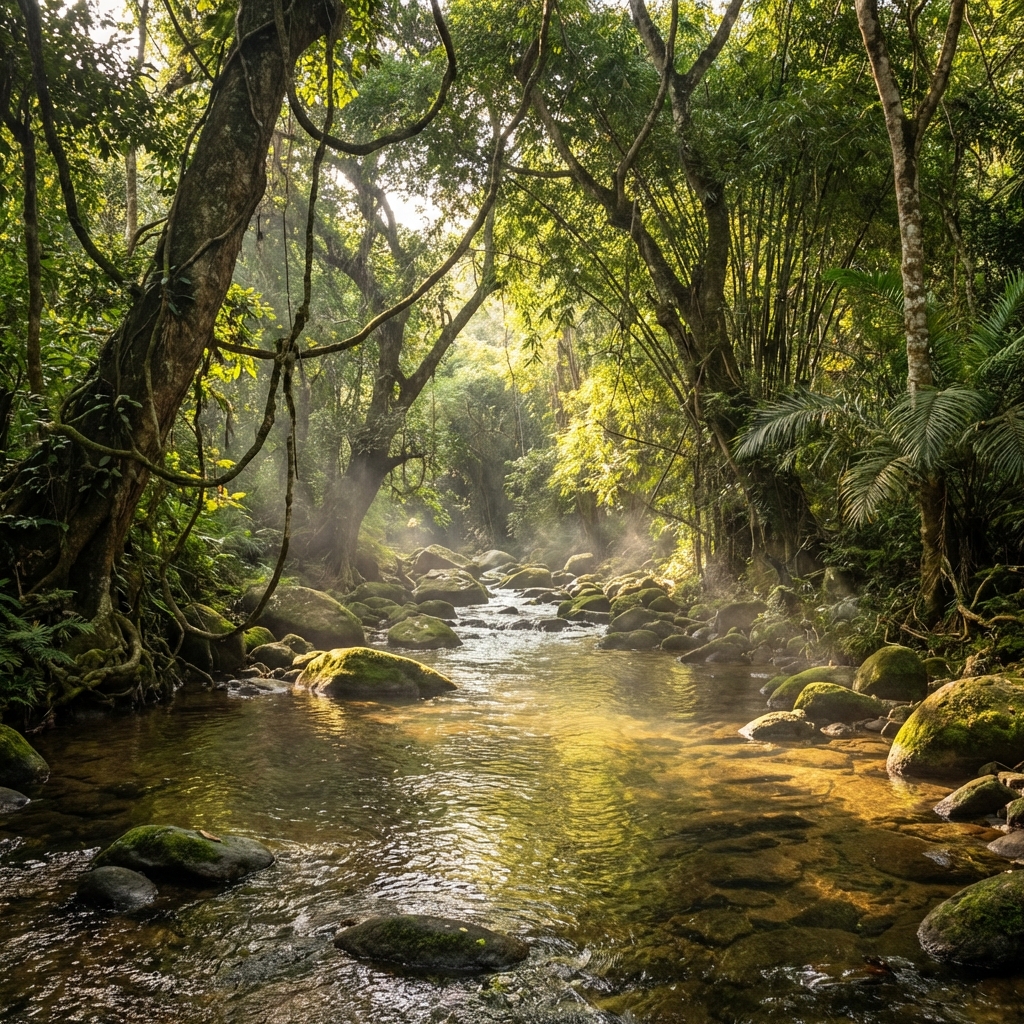
Long before modern town planning existed in the Bono Region, Akan founders named settlements after the deepest truth of the landscape. The name Nsuhia carries the Akan root nsu—water. The town did not name the streams; the life-giving streams named the town. For generations, those waterways sustained households, watered cocoa seedlings and plantain farms, grounded spiritual customs, and connected the forest corridors where Mona and Colobus monkeys thrive inside the Nsuhiaman Monkey Sanctuary.
Every resident who has ever seen a river destroyed by alluvial galamsey knows what happens within forty-eight hours of an excavator touching a streambed. First, centuries of protective riverbank clay and root systems are ripped apart, sending suffocating silt downstream. Next, liquid mercury and toxic processing agents enter the current, binding invisibly into sediment, fish tissue, and groundwater tables. The water no longer sustains crops; livestock sicken; wells near town compounds pick up metallic contamination; and families who once stepped outside to clean streams find themselves paying daily out of modest farm incomes just to buy trucked water.
Scientific water-quality monitoring across Ghanaian river basins hit by illegal gold mining reveals a brutal biological timetable. While gold wash plants can strip a half-kilometer stretch of riverbank in less than three weeks, suspended solids climb exponentially, dissolved oxygen drops below survival thresholds for native freshwater species, and heavy metals such as arsenic and mercury lodge deep inside alluvial clay beds. Even if excavators pull out years later, heavy seasonal rains continue leaching trapped toxins back into agricultural wells and food crops grown on nearby floodplains.
To allow gold washing in Nsuhia’s waters would therefore be an act of cultural self-erasure. A town named after water cannot surrender its rivers to mud and mercury and still claim its own heritage. Protecting our streams is both an ecological necessity and an act of fidelity to every ancestor who settled this land and passed down the name Nsuhia intact.
3. The Real Gold of Nsuhia Walks in Green Uniforms and Walks Clean Roads
Propaganda from illegal mining syndicates often relies on a cruel illusion: they tell young men and weary farmers that digging pits is the fastest path to development. Yet look at the real, unretouched photographs taken right here in Nsuhia—evidence visible in the carousel above and preserved across our campaign archive:
Clean Town Infrastructure Worth Guarding
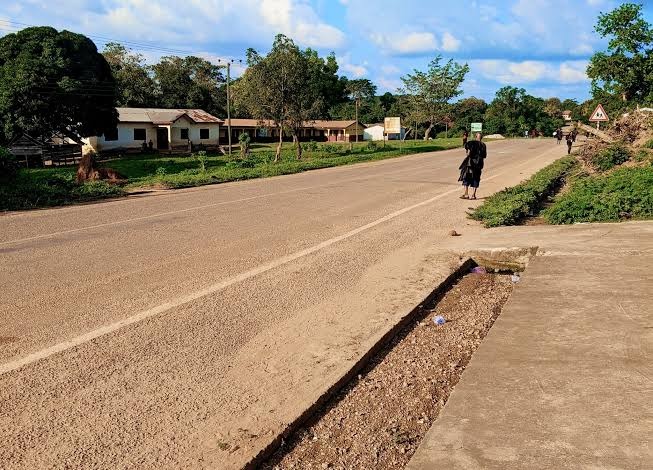
Drive along the main road through Nsuhia today and notice what you see in nsuhia-town-road-clean.jpg: solid asphalt unbroken by illegal haulage ruts, vibrant green grass edging clean concrete drains, intact community buildings standing quietly under wide blue skies, and neighbors walking safely along the roadside. Compare that peaceful morning scene to neighboring communities across Ghana where heavy mining low-loaders cracked paved roads, dumped yellow laterite slush across walkways, and filled drains with toxic tailing water.
A Living Community That Watches Its Gates
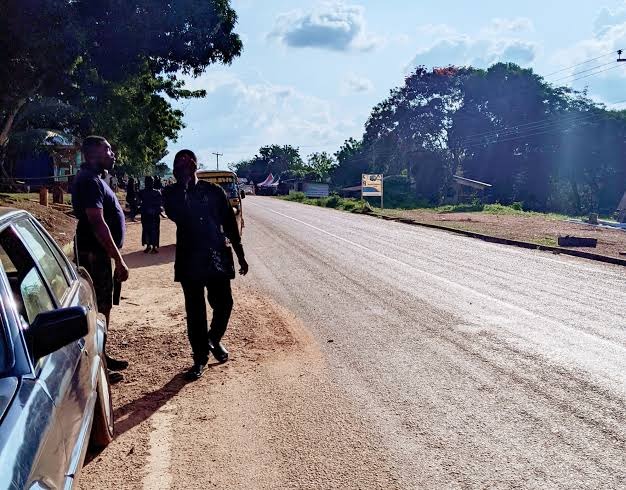
In nsuhia-community-roadside-watch.jpg, residents stand together by the roadside beneath tall tropical shade trees. Community vigilance in Nsuhia does not look like theatrical anger; it looks like neighbors who know one another, notice every unfamiliar vehicle passing through the town corridor toward farm tracks or toward the Mpamso Forest boundary, and keep lines of communication open between youth, elders, and diaspora associations like the Nsuhiaman Development Association (NDA).
Hundredfold Wealth Beneath the Shade Trees
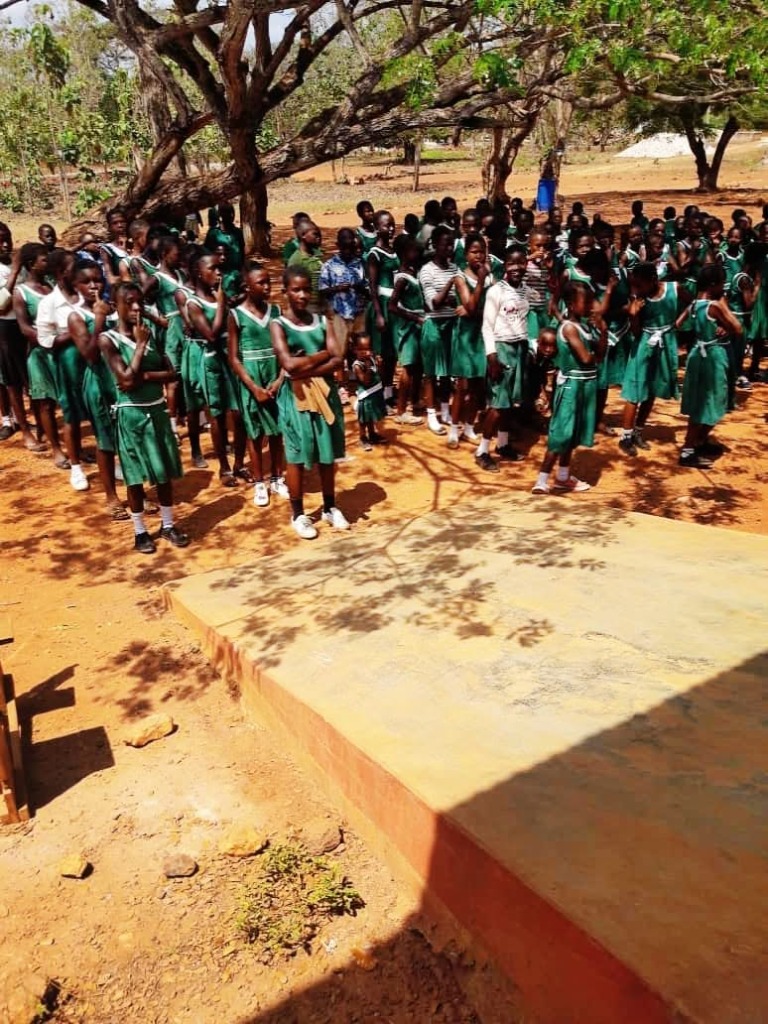
Most decisively of all, look at nsuhia-schoolchildren-green-uniforms.jpg: scores of Nsuhia schoolchildren gathered in crisp green uniforms around a solid assembly platform beneath sprawling, mature shade trees on clean, unscarred red earth. Those children attending local schools—including institutions like Nsuhia Methodist Primary and Nsuhia St. John’s Roman Catholic Primary and JHS—are Nsuhia’s true gold reserve.
Consider what happens to schools the moment galamsey enters a farming town:
- Dropouts replace graduates: Teenage boys and girls are lured out of classrooms for dangerous pit labor or sachet-water hawking around illegal sites, trading lifelong literacy and skilled trades for a few cedis that disappear inside a week.
- Toxic dust and noise invade playgrounds: Heavy machinery and mercury vapor drift into school compounds, while open, unfenced mining pits turn daily walks home into lethal drowning hazards during rainy season.
- Teachers request transfers away: Qualified educators refuse postings in communities where drinking water is contaminated, rent spikes artificially from miner cash, and security deteriorates.
Preserving Nsuhia’s schools, health center services shared with neighboring Asikasu, and peaceful streets is not sentimentality—it is hard-headed generational investment. Every student educated beneath those green-shaded trees has decades of productive value ahead that dwarfs every ounce of gold dust ever washed in a sluice box.
4. Gold Math vs. Heritage Math: Why Galamsey Always Leaves Communities Poorer
One of the smartest tools in an anti-galamsey campaign manager’s toolkit is pure arithmetic. Syndicates win arguments when they talk only about Day-One cash. They lose every argument the moment a family puts Day-One cash beside a thirty-year balance sheet.
| Community Asset | If Sold to Galamsey (18-Month Illusion) | Preserved Under Nsuhia Heritage Model (30+ Years) |
|---|---|---|
| Agricultural Land (Cocoa, Plantain, Cassava) | Topsoil stripped; heavy-metal residue; open death-trap pits; yields drop to zero for decades without multi-million cedi remediation. | Annual harvests every season; rising farm-gate food security; shade-grown agroforestry passed safely to children and grandchildren. |
| Rivers & Groundwater (Nsu) | Turbidity spikes immediately; mercury & arsenic seep into wells; town forced into costly daily water purchases and higher waterborne illness. | Clean streams supporting farms, livestock, household boreholes, and wildlife corridors across Dormaa Central. |
| Nsuhiaman Monkey Sanctuary & Forest | Habitat fragmentation drives Mona and Colobus monkeys away; ancient mahogany and silk cotton trees felled; eco-tourism reputation destroyed overnight. | 500+ acres of living rainforest generating continuous ranger jobs, conservation partnerships, student visits, and global eco-tourism visibility via nsuhia.com. |
| Schools, Youth & Public Safety | Classroom attrition, heavy-truck accidents on R54, youth substance risks, and sharp spike in violent nocturnal disputes around concessions. | High school progression, peaceful assembly yards, healthy youth workforce, and disciplined community pride (“Adum Russia”). |
| Who Keeps the Profit? | 85%+ of mineral value leaves Dormaa immediately for external financiers and foreign equipment owners; Nsuhia keeps the craters. | 100% of clean agricultural wealth, rents, trade, eco-tourism fees, and human talent circulates inside Nsuhia families. |
Notice the final row of that table. Even when gold prices surge on international markets in London or Zurich, rural Ghanaian communities rarely keep the treasure dug out of their soil. External sponsors finance the excavators, buy the fuel, take the bulk bullion out of the district, and vanish the afternoon enforcement raids arrive or the seam runs thin. What stays behind for local people is a poisoned crater where a cocoa farm used to feed three generations. Calling Nsuhia “Adum Russia” means our citizens can read that balance sheet clearly and refuse the bad trade before the first bucket of red earth is turned.
5. Forest & Wildlife at Risk: Nsuhiaman Monkey Sanctuary and the Mpamso Corridor
Environmental preservation is never confined neatly inside fence lines. Water runs downhill, forest canopies link animal breeding corridors, and roads carry threats across municipal boundaries. Nsuhia sits at a sensitive ecological junction inside Dormaa Central Municipality. Right inside our community lies the Nsuhiaman Monkey Sanctuary, spanning over 500 acres of ancient virgin rainforest where Mona and Colobus monkeys live freely among towering mahogany and silk cotton trees. Nearby stretches the Mpamso Forest landscape, an area that already witnessed painful reminders of how destructive and violent illegal resource encroachment can become when armed intruders clash over timber or forest access.
The lesson from forest conflicts across rural West Africa is unmistakable: waiting until destructive operations dig deep into community lands makes restoration nearly impossible and fractures social peace. That is why Nsuhia chooses early, peaceful, community-wide solidarity before any prospector ever gains a foothold near our boundaries.
Protecting the 500-acre Nsuhiaman Monkey Sanctuary is not a luxury hobby for nature lovers; it is a strategic anchor for the entire town. Every visitor paying the modest community entry fee (10–20 GHS), every researcher studying West African primates, and every travel story published on nsuhia.com reinforces an international spotlight on Nsuhia. Speculators thrive in silence. Sunlight and proud community documentation are among the strongest shields a rural town possesses.
6. Nananom, NDA, and Community Solidarity: The Moral Shield Behind Adum Russia
A common mistake grassroots heritage campaigns make is acting as if elders, families, youth, and diaspora members live in separate worlds. In Nsuhia, our strength flows directly from keeping every layer of community life speaking the same language:
The Custodial & Cultural Pillar
Under timeless Akan custom, stool and family lands are never private playthings owned by one sitting generation for quick cash liquidation. Elders, queenmothers, and family heads hold land in sacred trust uniting ancestors, living households, and children yet unborn. When Nsuhia chooses heritage over illegal digging, our town lives up to the deepest moral expectations of Akan stewardship—delivering clean streams and fertile shade to the next generation intact.
The NDA & Community Coalition Pillar
- Nsuhiaman Development Association (NDA): Connects Nsuhia residents on the ground with alumni, professionals, and extended families across Sunyani, Kumasi, Accra, Europe, and North America so local custodians receive steady moral and developmental backing.
- Landowners & Cocoa Farmers: Refuse short-sighted cash offers on family plots and maintain shared neighbor awareness along secondary farm tracks and stream corridors.
- Mothers, Teachers & Schools: Keep students grounded inside classrooms at Nsuhia Methodist Primary and St. John’s RC schools rather than drifting toward transient extraction labor.
- Youth Storytellers & Digital Guardians: Document Nsuhia’s clean roads, schoolchildren, Monkey Sanctuary, and sacred waters openly on
nsuhia.comso the world knows what we stand to preserve.
7. The Operation “Adum Russia” Playbook: How NDA & Nsuhia Keep Every Gate United
Values inspire, and shared habits protect. Nsuhia’s everyday community discipline stops destructive shortcuts through four peaceful, transparent habits practiced by ordinary families:
- Transparent Family & Landowner Conversations: Host open household discussions backed by the Nsuhiaman Development Association (NDA) so no elderly caretaker or single lineage member feels pressured into signing confusing “prospecting” or “road clearing” papers behind closed doors.
- Neighborly Roadside & Stream Awareness: Neighbors living along the R54 corridor and farmers walking dawn trails naturally notice unfamiliar crews asking directions toward riverbanks or secluded cocoa plots, keeping open communication flowing across elders and youth.
- Calm Documentation & Community Notice: Rather than heated street arguments, residents calmly note vehicle descriptions, locations, and dates whenever suspicious machinery probes community borders, sharing accurate updates quickly with Nananom and NDA leadership so the town never gets blindsided by rumors.
- Daylight Sunlight Through
nsuhia.com: Publish real photographs of intact roads, schools, waters, and wildlife openly online so every family at home and abroad remains proud, informed, and committed to protecting what belongs to everyone.
8. Countering the Five Myths Used to Trick Communities Into Selling Out
Because illegal mining recruiters repeat the same talking points from the Western Region to Bono, every Nsuhia resident should know the exact factual rebuttal to each deception:
- Myth 1: “We are only doing small community prospecting for a week.”
Reality: Genuine community-approved projects happen openly in daylight through transparent consensus with Nananom, family elders, and the Nsuhiaman Development Association—never through unmarked trucks asking quiet guides to cut bush trails along river bends. - Myth 2: “After we take the gold, we will refill the holes and give you back your cocoa farm.”
Reality: Once excavators invert fertile topsoil thirty feet down beneath sterile laterite clay and gravel, cocoa seedlings either fail to root or suffer heavy-metal toxicity. Even partial mechanical backfilling without layered organic restoration leaves hardpan wasteland that floods every August. - Myth 3: “Gold brings youth jobs faster than farming.”
Reality: Illegal sites import outside machine operators while offering local youth hazardous pit-carrying jobs that vanish in months, leaving unemployed young men standing over ruined farmland with damaged health and zero trade skills. - Myth 4: “If Nsuhia refuses, neighbors will dig anyway.”
Reality: Every town that stands firm sets an inspiring regional example. Nsuhia’s stand strengthens pride across neighboring Dormaa communities rather than surrendering first. - Myth 5: “Nobody outside will ever know or care about a quiet forest corner.”
Reality: Todaynsuhia.combroadcasts Nsuhia’s clean roads, schoolchildren, and sanctuary globally. Any attempt to scar Nsuhia meets unified NDA and diaspora attention immediately.
9. What the Diaspora and World Must Know About Nsuhia
From Kumasi and Accra to London, Berlin, Toronto, and New York, sons and daughters of Nsuhia carry immense influence over what happens back home. Remittances sent by diaspora families build homes, pay school fees, finance cocoa inputs, and fund community projects coordinated by the Nsuhiaman Development Association. That same diaspora voice carries decisive weight in stopping galamsey before it starts.
If an uncle or family elder calls abroad asking whether to lease ancestral farmland to “a small company looking for minerals,” diaspora citizens must speak with one Adum Russia voice: Do not sign. Never trade permanent family inheritance for temporary money. Offer clean partnership alternatives instead—improved cocoa rehabilitation, poultry and livestock hubs, vegetable irrigation from clean streams, solar grain processing, and upgraded hospitality around the Nsuhiaman Monkey Sanctuary.
Every visit to the Operation Adum Russia Campaign Hub and every share of this manifesto puts another layer of public sunlight over Nsuhia. Illegal operators thrive in silence. When a small town in Dormaa Central speaks clearly on the open internet, backs its words with photographs of clean streets and green-uniformed schoolchildren, and stands united across elders, youth, and diaspora networks, nobody dares test it.
That is who we are. We are Nsuhia. We are Adum Russia. Our soil holds gold, and our heritage remains untouched.