Every historic movement eventually finds a heartbeat stronger than speeches: a song the grandmother hums while sweeping her courtyard, the driver whistles along the paved road, the student chants under assembly shade trees, and the diaspora member replays three thousand miles from home. For Nsuhia—proudly known across Dormaa Central as Adum Russia—that rallying heartbeat lives inside the call-and-response anthem “Nsuhia: Too Rich To Cry!”
Notice immediately what sets this piece apart from bitter laments written after rivers have already turned to toxic orange mud. Instead of mourning loss after the damage is done, Nsuhia sings from intact ground in full confidence. Every stanza weaves together Ghanaian street wisdom, maternal tenderness, agrarian pride, environmental urgency, and joyful highlife-rooted percussion. Below you will find the complete official anthem preserved in full, followed by a deep, line-by-line expatiation unpacking the spiritual, economic, and campaign strategy embedded in every bar.
Official Campaign Anthem: “Nsuhia — Too Rich To Cry!”
Nsu hia! (Too rich to cry!)
Gold dey ground! (Keep rivers clean!)
Too rich, too rich to cry!
Gold in the ground, cocoa on the tree
Tell me why my people still dey worry?
Mama say, “Son, lift your eyes”
Nsu hia, too rich to cry!
Hands in the soil, feet on the road
Make the blessing reach every home
Gold in the soil, rivers running free
That’s the future we want to see!
Nsu hia! (Too rich to cry!)
Nsu hia! (Lift your eyes!)
Gold dey ground! (Keep rivers clean!)
Let the whole town rise tonight!
Nsu hia! (Too rich to cry!)
Too rich, too rich, too rich to cry!
River runs deep, the harvest grows
Keep our waters clean as they flow
Build that school! (Build that school!)
Save that river! (Save that river!)
Small small, we go make it right
Gold and water, both are life
We got the land, we got the fire
Nsu hia, take us higher!
[Instrumental only: congas, shakers, handclaps, bass, rhythmic guitar groove and subtle flowing-river ambience. No lead lyrics.]
Nsu hia! (Too rich to cry!)
Nsu hia! (Lift your eyes!)
Gold dey ground! (Keep rivers clean!)
Let the whole town rise tonight!
Nsu hia! (Too rich to cry!)
Too rich, too rich, too rich to cry!
Nsu hia! (No more tears!)
Let the blessings reach us here!
Too rich to cry! (Too rich to cry!)
Nsu hia! (Nsu hia!)
Gold dey ground! (Rivers must flow!)
Too rich, too rich to cry!
[Instrumental Outro — drums and guitar gradually fade with gentle river sounds.]
1. The Intro: Why One Clap & Call-and-Response Unlocks Collective Courage
“Nsu hia! (Too rich to cry!) / Gold dey ground! (Keep rivers clean!) / Too rich, too rich to cry!”
Notice the surgical precision of starting with a single sharp handclap and immediate town-wide answer. Across Ghanaian communal life—from traditional durbars and church vigils to school assemblies and market gatherings—call-and-response proves instantly whether a community speaks with one mind or sits divided in confusion. A lone voice shouting “Nsu hia!” tests the atmosphere; a hundred voices roaring back “Too rich to cry!” announces solidarity in under three seconds.
Even more revolutionary is the psychological shift hidden inside those four words: Too rich to cry! Illegal mining recruiters win half their battles before arriving in town by convincing rural families that they are poor, forgotten, and desperate—therefore bound to accept whatever destructive cash envelope slides across the table. This opening chant shatters that defeatist lie instantly. A town seated over rich gold veins, crowned by green cocoa trees, blessed with clean streams (nsu), and anchored by a 500-acre Monkey Sanctuary is already wealthy beyond measure. Why would an heir of abundance weep or sell out like a pauper?
The second pairing—“Gold dey ground! (Keep rivers clean!)”—delivers Nsuhia’s signature “Adum Russia” posture in seven unforgettable syllables. We do not pretend our soil lacks gold. On the contrary, we state plainly that mineral treasure lies underground, and we answer immediately with the non-negotiable command: keep the rivers clean! Recognizing underground gold while refusing to poison surface water demonstrates sovereign self-mastery.
2. Verse 1 Part A: Looking Upward Instead of Digging Downward
“Gold in the ground, cocoa on the tree / Tell me why my people still dey worry? / Mama say, ‘Son, lift your eyes’ / Nsu hia, too rich to cry!”
Read those four lines slowly and observe the visual geometry they paint. An illegal miner always stares downward into clay, mud, pumps, and holes—tunneling beneath roots until trees topple over. By contrast, cocoa, plantain, timber shade trees, and school towers grow upward into sunlight. When the song asks, “Gold in the ground, cocoa on the tree / Tell me why my people still dey worry?”, it exposes a spiritual blind spot common across modern Ghana: anxiety caused by ignoring living blessings standing right at eye level while obsessing over buried shortcuts.
And notice who delivers the decisive wisdom: “Mama say, ‘Son, lift your eyes!’” In Nsuhia and across Akan households, mothers carry long memory. A mother remembers how a single well-tended cocoa farm paid school fees for four siblings across twenty years without destroying a single springhead. She knows that quick mining cash buys short-lived noise and bitter regret, while lifting a young man’s eyes upward—toward education, honest harvests, poultry and agro-enterprise, and clean heritage—builds homes that stand upright long after extraction rushes turn to dust.
3. Verse 1 Part B: Soil, Paved Road & Shared Household Blessing
“Hands in the soil, feet on the road / Make the blessing reach every home / Gold in the soil, rivers running free / That’s the future we want to see!”
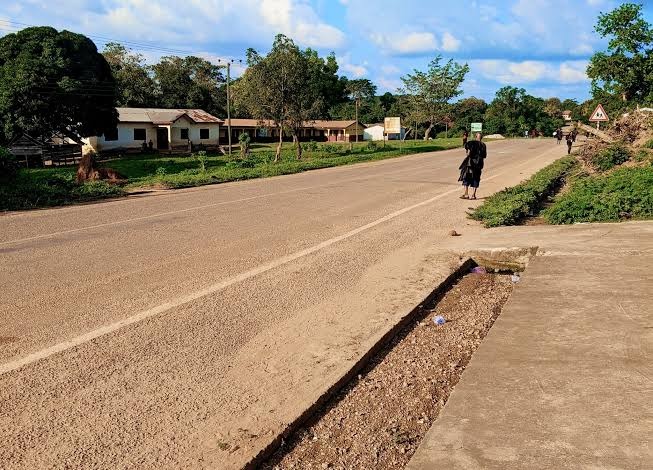
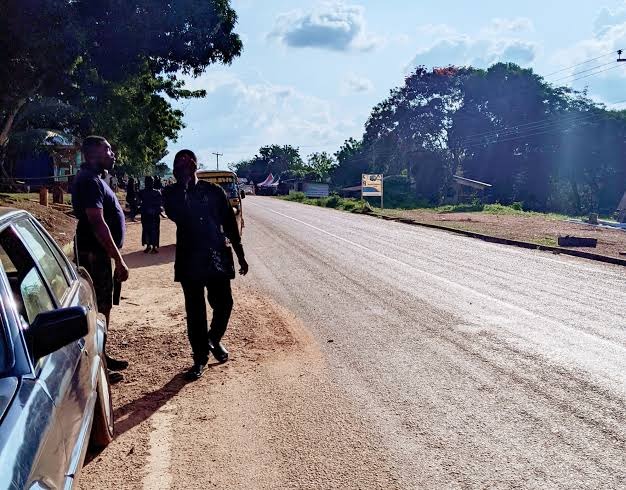
Look directly at our real verified photographs of Nsuhia while reading these four lines and watch the lyrics come alive on screen. “Hands in the soil” honors farmers nurturing cocoa, cocoyam, cassava, maize, and plantain across Dormaa Central without mercury runoff. “Feet on the road” connects directly to Nsuhia’s intact paved road corridor along the R54 highway (nsuhia-town-road-clean.jpg), where pedestrians, students, market traders, and community watch members move cleanly beside green verges rather than trudging through mining mud ruts.
Crucially, the next line states the goal of true development: “Make the blessing reach every home.” Look at the contrast with galamsey economics. Illegal mining enriches two or three external machine owners and leaves entire neighborhoods paying daily bills for trucked drinking water while coping with damaged roads and mosquito-ridden pits. Clean farming, intact infrastructure, and eco-tourism around the Nsuhiaman Monkey Sanctuary circulate harvests, school progress, and health safely through every compound across town.
4. The Refrain: Turning Heritage Pride Into Town-Wide Mobilization
“Nsu hia! (Too rich to cry!) / Nsu hia! (Lift your eyes!) / Gold dey ground! (Keep rivers clean!) / Let the whole town rise tonight!”
Every campaign manager knows a simple rule of mass persuasion: complex policy briefs convince committee chairs, but catchy refrains unify whole towns. Notice the three commands stacked smoothly inside one bouncy chorus: hold your head high (Too rich to cry), shift your ambition upward (Lift your eyes), and guard our namesake element relentlessly (Keep rivers clean).
When the refrain cries “Let the whole town rise tonight!”, it summons unity across every corner of Nsuhiaman—elders at palace courtyards, drivers at town junctions, mothers in kitchens, teachers preparing morning lessons, youth organizers monitoring rural boundaries, and diaspora alumni calling home from Sunyani, Kumasi, Accra, London, or Toronto. Nobody rises in anger or chaos; the whole town rises in proud vigilance so no nighttime excavator ever catches Nsuhia asleep.
5. Verse 2 Part A: Connecting Classrooms & Streams in One Breath
“River runs deep, the harvest grows / Keep our waters clean as they flow / Build that school! (Build that school!) / Save that river! (Save that river!)”
Pay close attention to the pairing inside those call-and-response shouts: “Build that school! / Save that river!” That two-part chant deserves to be painted across banners outside every educational gathering in Dormaa Central. Why? Because in Ghana’s rural reality, schools and rivers rise or collapse together.
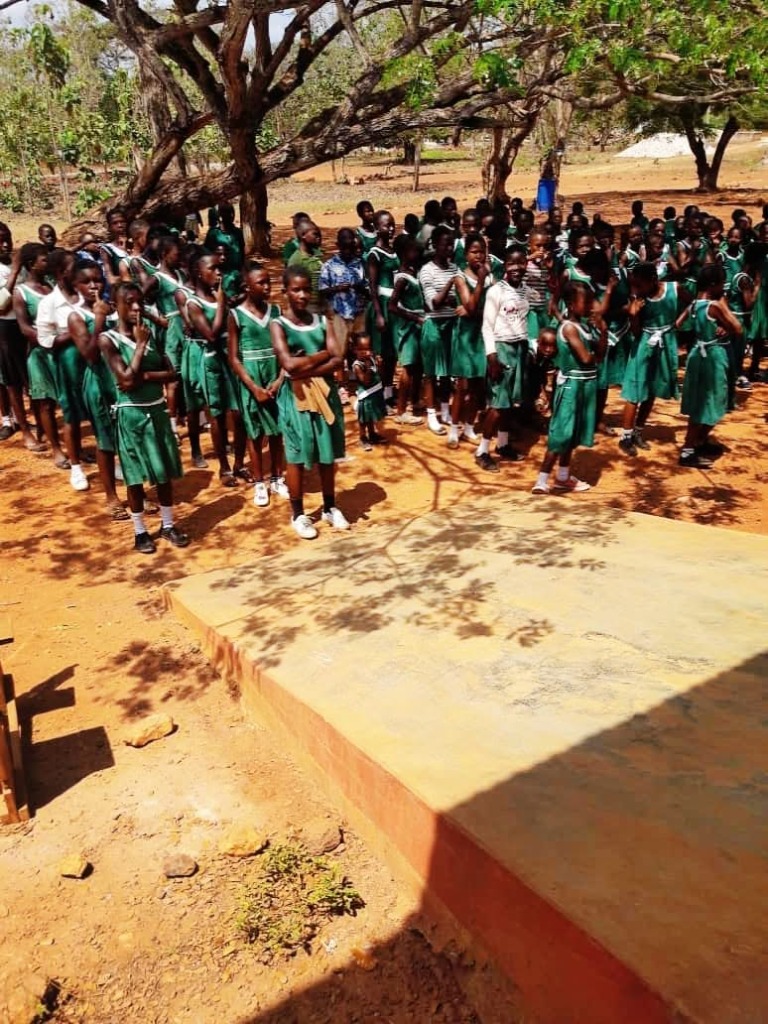
Look at our real photograph of Nsuhia schoolchildren gathered in green uniforms beneath mature shade trees (nsuhia-schoolchildren-green-uniforms.jpg). For those students at Nsuhia Methodist Primary, Nsuhia St. John’s Roman Catholic Primary and JHS, and neighboring institutions to study sharply, three things must stay clean: their school compound water, the food harvested on family farms, and the peaceful roads connecting home to school. Saving the river directly builds and sustains the school—both biologically by protecting young brains from heavy metals, and economically by ensuring cocoa and harvest profits keep funding uniforms, textbooks, and tertiary ambitions.
6. Verse 2 Part B: Compound Patience & The Harmony of Gold and Water
“Small small, we go make it right / Gold and water, both are life / We got the land, we got the fire / Nsu hia, take us higher!”
Few Ghanaian idioms carry deeper practical wisdom than “Small small, we go make it right.” Across West Africa, “small small” never means laziness or weak ambition; it describes patient, unbreakable compound growth—planting shade trees beside young cocoa seedlings, adding another classroom block term by term, expanding clean poultry and agro-processing micro-enterprises year by year, and welcoming visitors patiently into a 500-acre forest sanctuary. Hurried extraction tears a whole valley apart in twenty days and calls ruin “fast money.” Patient building creates assets that still pay rent and harvest income fifty years later.
And look closely at the philosophical heart of Verse 2: “Gold and water, both are life.” How profoundly balanced that statement is! Nsuhia does not curse the mineral blessings placed inside its geology. Gold has legitimate worth—as long-term national reserve, cultural regalia symbolizing Akan royal dignity, and sacred ancestral endowment beneath our feet. Yet water is equally life—living, flowing, irreplaceable daily sustenance running through every human cell, plant leaf, and sanctuary stream. Respecting both means refusing to murder water in a reckless frenzy to scratch out gold illegally. Kept in rightful harmony, gold sleeps honorably underground while clean rivers flow visibly overhead, lifting Nsuhia higher generation after generation.
| Lyric Movement | Core Line | Campaign & Heritage Meaning for Nsuhia (“Adum Russia”) |
|---|---|---|
| Intro Call | Nsu hia! (Too rich to cry!) | Replaces scarcity desperation with sovereign abundance mindset before brokers ever speak. |
| Core Mandate | Gold dey ground! (Keep rivers clean!) | Affirms underground gold reserves while enforcing strict zero-tolerance river protection. |
| Verse 1 Wisdom | Mama say, “Son, lift your eyes” | Honors elders & mothers steering youth away from mud pits toward cocoa, schools, and clean roads. |
| Verse 2 Action | Build that school! Save that river! | Links green-uniformed students directly to clear stream preservation and compound progress (“small small”). |
| 16-Bar Drum Break | Congas, shakers, guitar + flowing river | Unites community rallies, radio spots, and youth reels through joyful Ghanaian percussion over flowing water. |
| Final Outro | No more tears! Rivers must flow! | Cements Nsuhia’s permanent vow: clear water and proud heritage outlast every boom. |
7. The 16-Bar Drum Break: Why Joyful Rhythm Beats Despair in Campaigning
Look carefully at the production direction written into the bridge: [Instrumental only: congas, shakers, handclaps, bass, rhythmic guitar groove and subtle flowing-river ambience. No lead lyrics.]
As campaign strategy, that sixteen-bar drum break is pure brilliance. Too many environmental advocacy pieces sound mournful, dry, or intimidatingly academic—fine for conference rooms in Accra, quickly skipped on phones in Dormaa. By dropping lead lyrics for sixteen vibrant bars of classic West African percussion—warm talking congas, crisp shakers, rhythmic palm claps, rolling highlife guitar, deep bassline, and the soft authentic murmur of clear flowing water underneath—the anthem hands the stage directly to the community itself.
During those sixteen bars:
- At school assemblies & festivals: Students, teachers, and elders clap in unison while dancing cultural steps, turning environmental defense into celebration rather than grim lecture.
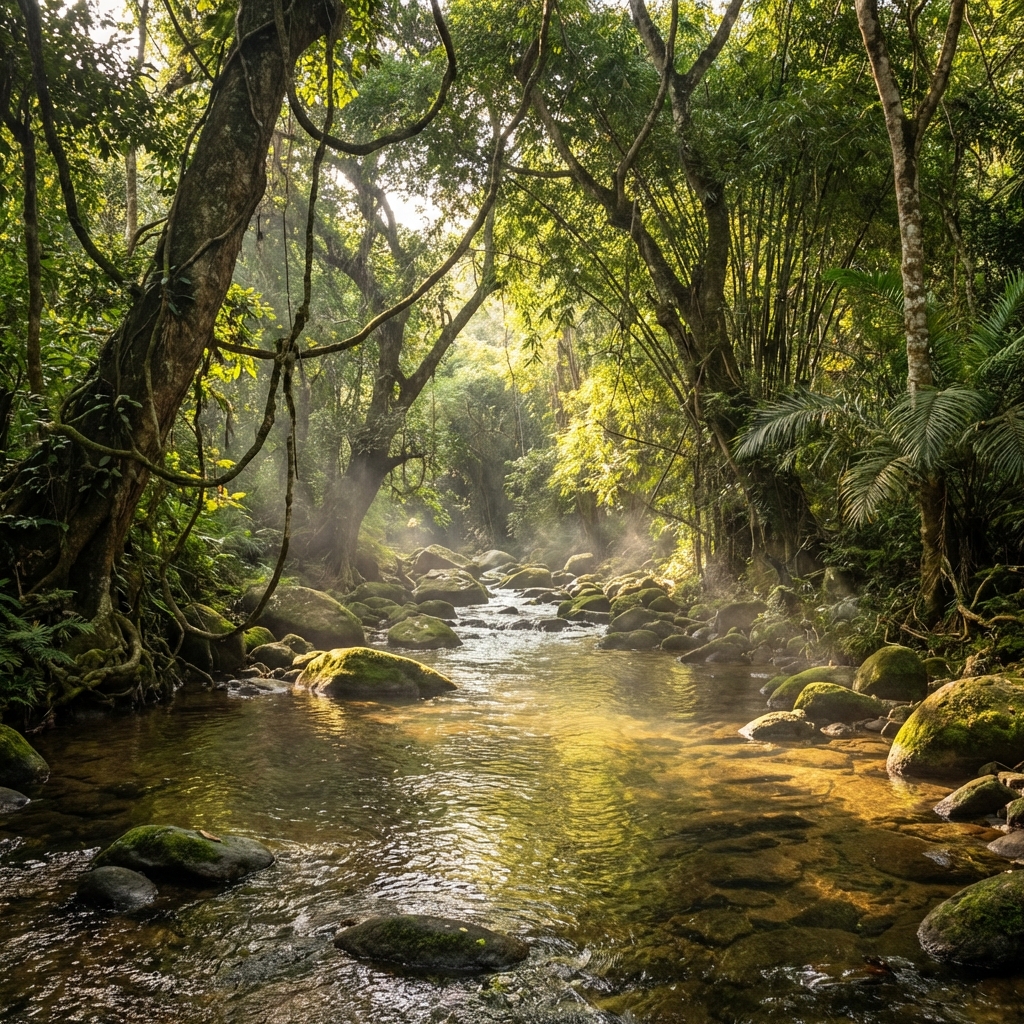
- On TikTok, Instagram Reels & WhatsApp Status: Sixteen bars of clean rhythmic percussion provide the ideal visual montage bed showing Nsuhia’s clean paved street, friendly neighbors by the road, schoolchildren under broad shade trees, Mona and Colobus monkeys leaping across sanctuary branches, and bright water flowing through forest stones.
- Subliminal Memory Lock: That subtle flowing-river ambience woven quietly behind bass and guitar trains every listener’s ear to associate Nsuhia with clear, musical water—making the very thought of muddy dredging sludge feel discordant and offensive.
8. Final Refrain & Hypnotic Outro: “No More Tears! Rivers Must Flow!”
“Nsu hia! (No more tears!) / Let the blessings reach us here! / Too rich to cry! / Gold dey ground! (Rivers must flow!)”
Notice how the Final Refrain raises the emotional climax by introducing two urgent shouts: “No more tears!” and “Let the blessings reach us here!” Across Ghana, towns devastated by unchecked extraction have shed real tears—mothers crying over poisoned wells, fathers crying over dead cocoa acres, bereaved families weeping over pit collapses. By declaring “No more tears!” ahead of time, Nsuhia turns national cautionary tales into protective armor.
And as the outro fades softly—drums and guitar gradually receding until only gentle flowing river sounds remain—the listener is left sitting beside what truly defines Nsuhia: pure water whispering calmly through intact green earth. The drums celebrate our fire; the flowing river seals our name.
9. How to Deploy This Anthem Across Nsuhia & the Diaspora Today
Music only moves history when people sing and share it everywhere. Here is a practical five-step rollout for bringing “Nsuhia — Too Rich To Cry!” alive across Dormaa Central and diaspora communities right away:
- Morning Assembly & Youth Choir Lead: Share the call-and-response intro and Refrain with music teachers, cultural troupes, and youth leaders at Nsuhia Methodist Primary and St. John’s RC schools so every student learns the chant naturally alongside percussion claps.
- Short-Form Video Montages (15–30 Seconds): Record community members singing the hook over our real town road, assembly shade trees, and stream visuals, linking viewers directly to nsuhia.com/protect-nsuhia/ and the Operation Adum Russia Manifesto.
- Local Studio Highlife / Afrobeats Recording: Invite talented young Dormaa vocalists, drummers, and highlife guitarists to record the full studio arrangement—complete with live congas, crisp shakers, and field-recorded Nsuhia stream ambience during the sixteen-bar break!
- WhatsApp & NDA Homecoming Soundbed: Open every Nsuhiaman Development Association town hall or diaspora Zoom call with the opening chant: “Nsu hia! Too rich to cry! Gold dey ground! Keep rivers clean!”
- Community Banners & T-Shirts: Print bold dual lines on durable campaign shirts and town banners: front reading “NSUHIA — ADUM RUSSIA”, back reading “GOLD DEY GROUND · KEEP RIVERS CLEAN · TOO RICH TO CRY.”
Whenever a stranger asks why Nsuhia refuses to gamble away its heritage for destructive digging, you no longer need a twenty-minute debate. One sharp clap starts the truth ringing clear across Dormaa: Nsu hia—too rich to cry. Gold dey ground—keep rivers clean!