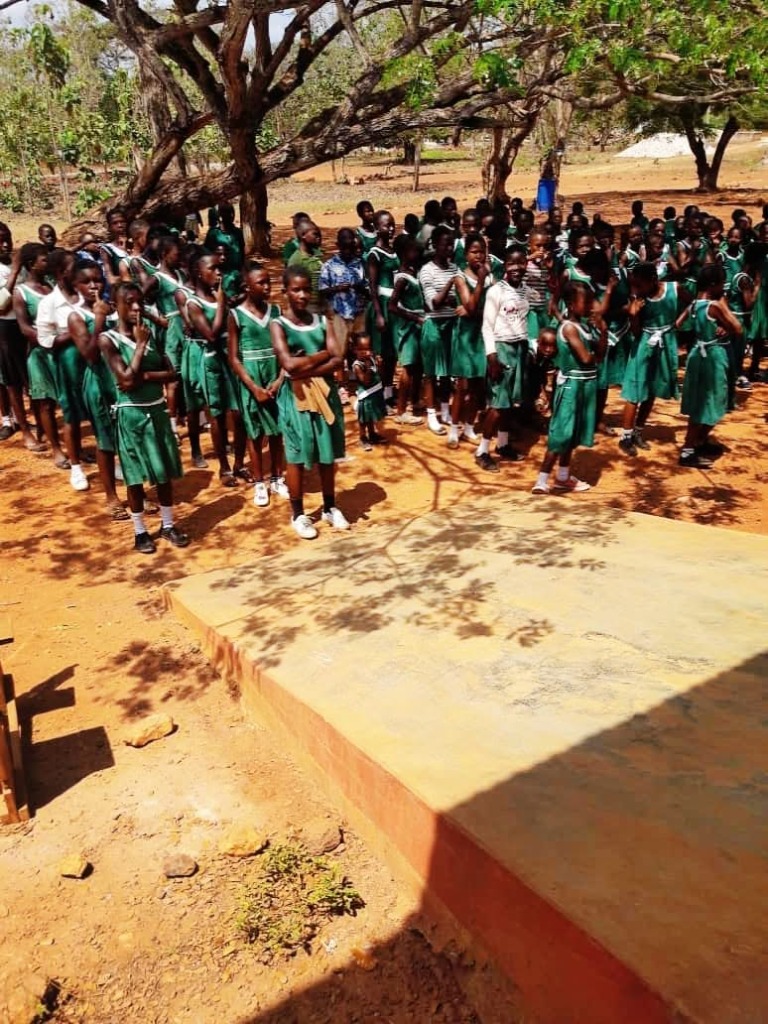
Look closely at the photograph at the top of this story. Dozens of Nsuhia students stand shoulder to shoulder in crisp green uniforms around a solid concrete assembly platform. Overhead stretch wide, leafy branches casting cool morning shade across clean ochre earth. Nobody is wading through ankle-deep sludge. Nobody is inhaling diesel fumes from clandestine generators. Nobody has dropped out of Junior High School to shovel gravel behind an excavator.
When the people of Nsuhia call themselves “Adum Russia” and declare that our land holds gold yet we refuse to trade away our heritage, this photograph explains the entire moral equation in a single frame. Our real gold is not buried under clay waiting for a pump; our real gold is standing in green uniforms preparing to become doctors, engineers, teachers, agronomists, nurses, software builders, and stewards of Dormaa.
1. The Silent Educational Collapse Inside Galamsey-Hit Towns
Public debates about galamsey in Ghana naturally focus first on chocolate-brown rivers and cleared forest reserves. Yet headteachers, circuit supervisors, and parents across affected districts consistently report an equally devastating crisis happening quietly behind classroom walls. The moment illegal gold extraction moves into a community, schools absorb immediate and compounding shocks that echo for decades:
- Early Teenage Dropout Waves: Young boys in Primary 6 and JHS 1–3 are tempted away from homework by daily cash wages for carrying fuel cans, washing stones, or running errands around camps. Girls frequently leave classes to hawk food and sachet water along dusty pit tracks. Once a teenager handles cash outside school discipline, returning to algebra and English comprehension becomes tragically rare.
- Mercury and Heavy-Metal Vulnerability: Children are far more biologically vulnerable than adults to mercury, lead, and arsenic contamination. Even small levels entering community streams or vegetable gardens impair memory, attention span, and neurological development—quietly lowering learning outcomes across an entire cohort.
- Drowning Traps Along School Footpaths: Abandoned mining pits left uncovered fill quickly during Bono Region rains. Across Ghana, school routes that children walked safely for fifty years turn into unmarked hazards covered by floating weeds.
- Clean Water Shortages on Compound: Schools depend on reliable clean water for drinking, sanitation, and school-feeding kitchens. Once nearby streams turn turbid and boreholes drop or foul, basic hygiene collapses—forcing girls in particular to miss days of instruction every month.
- Teacher Retention Flight: Dedicated educators accept rural postings when towns offer peace, affordable housing, clean food, and respect. When illegal camps drive up room rents, spike noise levels overnight, and strain basic clinics, experienced teachers apply rapidly for urban transfers.
2. Why Intact Schools and Intact Roads Are One Shared System
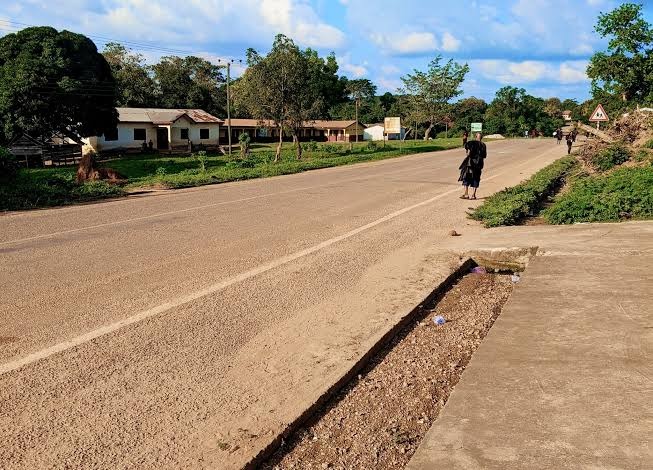
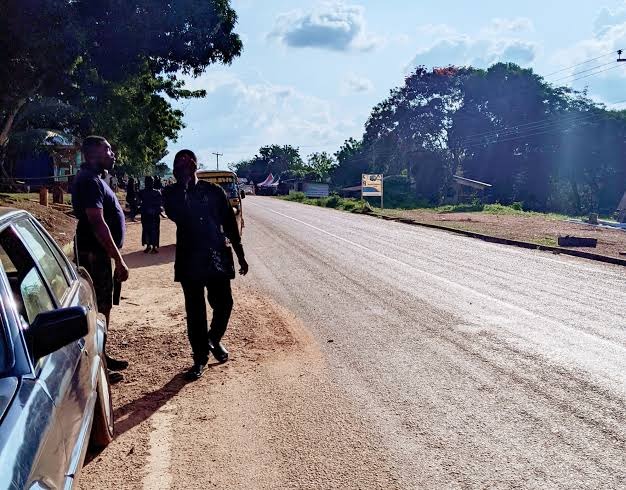
Examine both the school assembly photograph and our roadside view of Nsuhia together. A rural town’s future depends on keeping its physical infrastructure unbroken. Along the Dormaa-Ahenkro to Nkrankwanta road through Nsuhia, clean asphalt and clear roadside drains do far more than look tidy in photographs:
- They allow teachers and nurses at the local health center serving Nsuhia and Asikasu to commute reliably year-round without missing instructional days during heavy rains.
- They let farmers move plantain, cocoa, vegetables, and poultry feeds without losing half their profit margin to broken vehicle axles or washed-out feeder bridges.
- They keep school-age pedestrians visible and safe on well-cleared shoulders rather than forcing children onto muddy detours next to overloaded mining tippers.
Every town that permits heavy mining earthmovers onto community feeder roads loses those roads inside a single rainy season. Taxpayers and local development associations spend decades lobbying for clean pavement; illegal profiteers tear it up in months and never pay a pesewa toward asphalt repair. When we defend our clean paved street in Nsuhia, we are defending every schoolchild’s safe morning walk.
3. Nsuhia’s Educational Pride: Investing Where Real Value Multiplies
Nsuhia is rightly proud of its schools—from Nsuhia Methodist Primary to Nsuhia St. John’s Roman Catholic Primary and Junior High School—and the discipline instilled by teachers, pastors, imams, and parents across the community. Education in Akan tradition is never treated as an individual luxury; it is an ancestral obligation. When an elder pays fees or clears land around a schoolyard, they are planting shade trees under which they themselves may never sit.
| Youth Pathway | Illegal Pit Labor (Galamsey) | Nsuhia Protected Education & Skills Track |
|---|---|---|
| 1-Year Outcome | Quick pocket cash spent rapidly; chronic exhaustion; high accident risk; broken study habits. | Promoted to next grade; clean health; active sports, reading, and community mentorship. |
| 5-Year Outcome | Pit exhausted or seized; zero recognized certification; chronic skin/respiratory strain; polluted family farm. | SHS / TVET / tertiary completion; apprentice mastery or agribusiness launch on fertile land. |
| 20-Year Legacy | Unreclaimed craters; dependence on external aid; children inherit degraded environment. | Skilled professionals, teachers, engineers, and commercial farmers lifting extended families via NDA. |
4. The Health & Nutrition Link: Clean Farms Feed Sharp Minds
Educational excellence never happens on an empty or poisoned stomach. Children sitting in Primary and Junior High classrooms in Nsuhia learn sharply because surrounding family farms grow fresh plantain, cocoyam, cassava, maize, tomatoes, okra, and garden eggs in uncontaminated soil irrigated by clean rain and streams. In mining-scarred towns across Ghana, agricultural destruction creates a double crisis for children: food prices jump sharply as local gardens vanish into muddy pits, while root crops grown downstream from active gold washing risk absorbing trace heavy metals.
Protecting Nsuhia’s soil therefore acts directly as a school nutrition shield. A healthy breakfast of fresh local food paired with clean drinking water from protected town wells and streams keeps childhood illness low, clinic visits rare, and classroom energy high throughout every school term. Mothers and fathers in Nsuhia do not need to import overpriced food from neighboring regions because their own backyard plots stay rich, unpoisoned, and fertile.
5. Shade Trees, Gathering Grounds, and Cultural Grounding
Look again at the sprawling canopy towering above the assembly platform in Nsuhia’s school photograph. Mature tropical shade trees on Ghanaian school compounds are far more than decoration. They cool dusty playgrounds during dry harmattan afternoons, anchor topsoil against gully erosion, give students natural outdoor classrooms for reading and cultural drumming rehearsals, and remind every child visually that Nsuhia lives in harmony with the forest.
When bulldozers strip town fringes for quick gold washing, ancient trees come down first. Once shade vanishes, ground temperatures rise sharply, windblown laterite dust aggravates asthma and eye infections, and the serene atmosphere that turns a rural schoolyard into a place of joyful focus evaporates. Preserving those shade trees beneath which Nsuhia’s children stand today is preserving the sensory peace of childhood itself.
6. The Nsuhia “School-Shield” Pledge: Practical Action for Parents, Teachers & Alumni
Defending Nsuhia’s classrooms against galamsey temptations requires active, day-to-day collaboration across four groups who already care deeply about our youth:
- Parents & Guardians: Reject every temptation to pull JHS youth out for casual bush errands when outsiders offer quick cash. Monitor unfamiliar visitors asking youth to guide them toward river bends or wooded boundaries, and speak openly at home about why Adum Russia never trades classrooms for craters.
- Headteachers & PTA Committees: Use morning assemblies and PTA meetings twice each term to educate children on water conservation, why Nsuhia means water (nsu), and the ecological role of the Nsuhiaman Monkey Sanctuary. Turn local conservation pride into biology, social studies, and essay field projects so students become fierce defenders of their own heritage.
- Alumni & Nsuhiaman Development Association (NDA): Channel diaspora alumni contributions directly into scholarship awards, STEM reading materials, solar study lamps, clean borehole maintenance on school compounds, and practical vocational and digital mentorship so students see tangible rewards from staying in class.
- Youth Leaders (“Adum Russia” Vanguard): Position secondary graduates not as idle bystanders, but as proud guardians of Nsuhia’s digital presence, eco-tourism trail stewardship, modern poultry/agribusiness startups, and early-warning community communication.
7. Building Career Pathways That Outshine Any Illegal Pit
Young people rarely get lured into dangerous pits when they can see credible economic doors opening inside their own district. That is why anti-galamsey campaigning in Nsuhia goes hand in hand with practical youth opportunity:
- Eco-Tourism & Forest Guiding: Expanding structured ranger apprenticeships and cultural storytelling tours linked to the 500-acre Nsuhiaman Monkey Sanctuary gives young graduates paid work directly rooted in keeping trees standing.
- Modern Agribusiness & Poultry Value Chains: The Dormaa Central corridor is renowned nationwide for poultry enterprise and resilient cocoa cultivation. Teaching youth modern feed formulation, irrigation, cold-chain marketing, and cooperative aggregation turns inherited land into serious modern income.
- Digital Storytelling & Remote Skills: Through platforms like
nsuhia.com, young writers, photographers, and coders from Nsuhia learn to publish authentic community media, manage small businesses online, and connect Dormaa farmers directly with urban buyers in Sunyani, Kumasi, and Accra.
8. Classroom-to-Community Water Monitoring & Civic Pride
Education works best when lessons inside textbooks connect directly to what children see outside their classroom windows. Science teachers and community elders in Nsuhia can turn the town’s clean streams and unspoiled playgrounds into living laboratories. Senior primary and Junior High students learning about filtration, topsoil ecosystems, forest biodiversity, and basic civic governance gain a lifelong emotional attachment to their landscape when they understand why Nsuhia bears the name nsu (water) and why guarding those streams keeps their school compound healthy.
Every term, Parent-Teacher Associations across Dormaa Central can invite elders, sanctuary rangers, and health officers from the Nsuhia–Asikasu facility to speak openly with older students about career pathways in nursing, agriculture, forestry, civil engineering, and public administration. When teenagers hear real professionals who grew up on the exact same school grounds explain how classroom discipline unlocked university diplomas and stable livelihoods, the false lure of overnight illegal pit wages evaporates completely.
9. Why Mothers and Grandmothers Anchor Adum Russia
Across Akan history, queenmothers, mothers, and market women often detect social decay long before formal committees meet. In Nsuhia, mothers waking at dawn to fetch clean water, prepare school uniforms, and transport farm produce along the R54 road carry direct daily stakes in keeping galamsey outside town boundaries. When mothers refuse to sell snacks to illegal camp operators, refuse to rent compound rooms to unregistered night prospectors, and insist that their sons and daughters remain in morning assembly under the shade trees, they erect a social barrier stronger than steel gates.
Too often, outside financiers try to bypass women and elders altogether by tempting a few isolated individuals behind closed doors. By bringing mothers, teachers, youth leaders, and diaspora sponsors into one visible coalition under the Nsuhiaman Development Association, Nsuhia closes every loophole. Nobody can quietly trade away the ground beneath a schoolyard when the whole town is watching together.
10. The Diaspora Alumni Compact: Sponsoring Classrooms Over Craters
Sons and daughters of Nsuhia working as nurses, teachers, artisans, engineers, and entrepreneurs in Kumasi, Accra, Europe, and North America already remember sitting on wooden benches in Dormaa Central and lining up for morning assemblies under those exact shade trees. When diaspora chapters organize through the Nsuhiaman Development Association (NDA), even modest collective projects transform student confidence immediately: upgrading library bookshelves, painting assembly platforms, repairing school roof gutters for clean rainwater harvesting, funding BECE mock-exam clinics, and offering practical holiday internships in agriculture, solar maintenance, and computing.
Every cedi invested in a classroom desk or textbook yields compounding social dividends for forty years. When teenagers watch older Nsuhia alumni return home with dignity to upgrade their alma mater, the illusion that anyone needs illegal alluvial gold to succeed dies on the spot. Children learn visually that education, discipline, and intact hometown pride build lasting respect.
11. A Three-Term School-Year Action Calendar for Nsuhia
Good intentions turn into lasting habits when headteachers, PTA chairs, and NDA youth mentors anchor conservation inside the ordinary Ghanaian academic calendar:
- Term One (September–December): Host an opening morning assembly pledge under the shade trees celebrating Nsuhia’s clean compound, organize supervised student nature walks into the Nsuhiaman Monkey Sanctuary so children see living biodiversity firsthand, and inspect school drinking-water systems before dry weather deepens.
- Term Two (January–March): Run inter-class essay, debate, and poetry contests centered on the theme “Why Nsuhia Chooses Water, Trees, and Books Over Illegal Gold”, inviting alumni from Dormaa, Sunyani, and Kumasi to distribute exercise books and study awards.
- Term Three (May–July): Conduct tree-planting maintenance around school borders with native shade species, document BECE candidate readiness workshops, and share year-end progress stories with diaspora families through
nsuhia.com.
12. Digital Storytelling as Youth Defense
Notice one remarkable truth about the digital era: previously, remote rural communities suffered in silence when powerful actors tried to bend local rules behind closed doors. Today, young people in Nsuhia hold smartphones, photography, GPS mapping, and a sovereign digital platform at nsuhia.com. Documenting clean schools, green-uniformed scholars, intact roads, and wildlife sanctuaries online creates a permanent public record.
Consider what happens when a young Nsuhia graduate uploads clear, dated photographs of clean school yards, thriving farms, and healthy forest trails onto international platforms and local news channels: every potential investor, education donor, and government inspector sees a community worthy of partnership rather than another forgotten mining tragedy. Furthermore, should any outsider ever attempt unauthorized digging near school borders or town drains, an entire generation fluent in smartphone photography and digital reporting stands ready to expose the encroachment before a second bucket of soil moves.
When Nsuhia puts these images forward under Operation Adum Russia, we are telling every student under those shade trees: Your classrooms, your drinking water, and your hometown are worth standing up for. You do not need to destroy your soil to prove your worth, and nobody will ever be permitted to steal your future beneath the earth. Gold sleeps quietly below; Nsuhia’s children rise brightly above.