
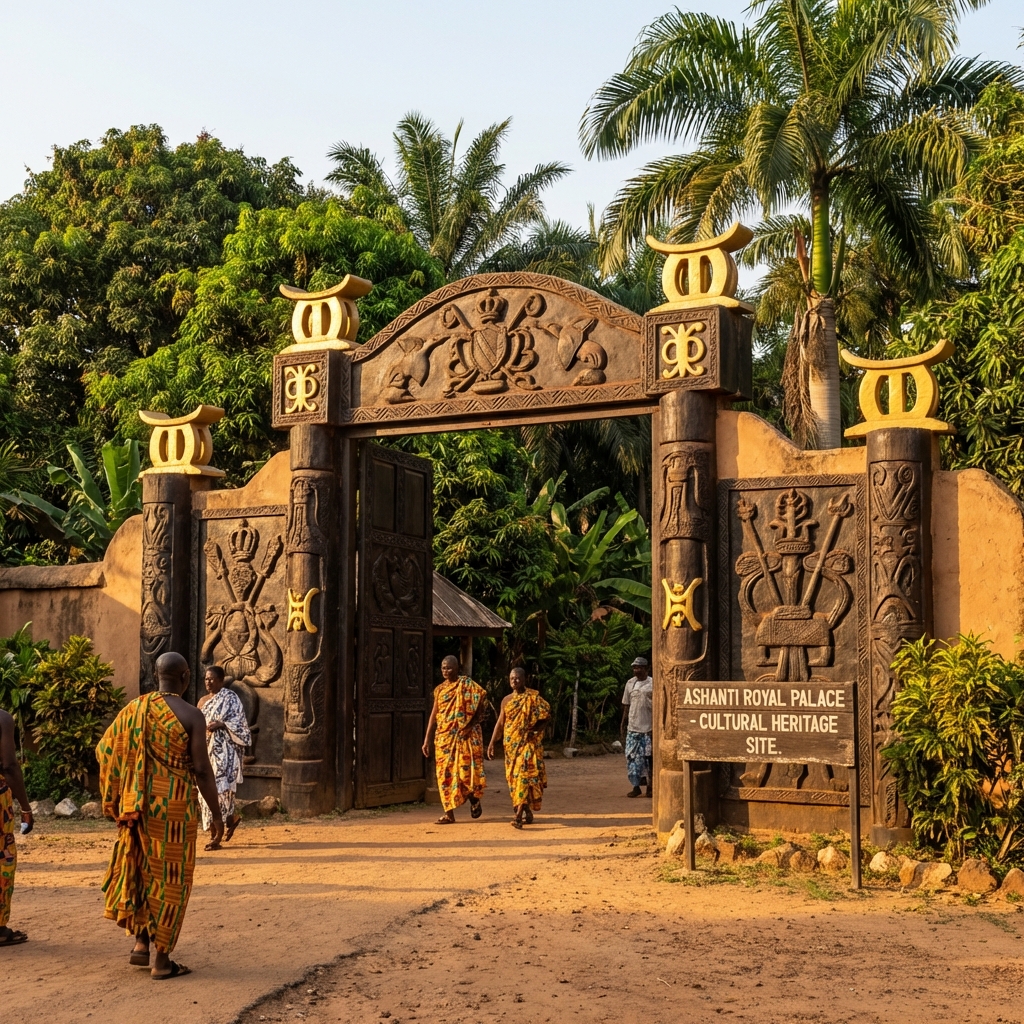
The Dormaa Traditional Area is one of Ghana's most historically significant regions. Its royal lineage stretches back to the great migrations of the Akan people, and its stool — the ultimate symbol of authority in Akan governance — has never been surrendered. To understand Dormaa's royalty is to understand the architecture of West African political thought.
The Akan Stool
In Akan tradition, the stool is not merely furniture. It is the soul of the chieftaincy — a living vessel of ancestral authority that belongs not to the chief personally, but to the community across time. The black stool, the highest form, is never sat upon; it is venerated. The Nsuhiaman stool carries this weight.
Architecture as Governance
The palace architecture of Nsuhia reflects the Akan principle that governance should be visible and dignified. The compound design, the reception halls, the symbolic carvings — each element communicates something about how authority is understood and exercised. Form follows function, and the function is the preservation of communal identity.
The Dormaa Migration
Historical accounts trace the Dormaa people's arrival in their current territory to migrations from the north and east, part of the broader Akan expansion across the forest zone of present-day Ghana. They settled, consolidated, and built — and what they built in Nsuhia endures.
Living Tradition
The royalty of Dormaa is not a museum exhibit. Chiefs preside over disputes, ceremonies, and development decisions. The traditional council remains a governing body with genuine authority alongside the state apparatus. This parallel governance is not anachronism — it is a sophisticated system that has proven remarkably adaptive.